Category Archives: Society News

Vote on proposed SMM bylaws, constitution and membership structure changes

Dear Members,

Our 2022 ballot is now live on our website. All current members should log in and vote on several important pieces of Society business. There are many changes to our governing documents, including term limits, changing membership types, approving a stipend for our journal editor and more. It is also time to vote for or against a change in our membership dues structure and rates. We have been discussing this as a community since December but for a refresher, you can read about these changes in this news item on our website. The ballot will be open for 4 weeks. We hope that all members will take part in shaping the future of the Society.

Here is the link to the ballot: https://www.marinemammalscience.org/for-members/2022-members-ballot/

The ballot will close at 3:00 PM EST on Monday, 11 April 2022.

Best wishes,
Emer Rogan
Nominations and Elections Committee Chair

Dr. Randy Wells Receives the SMM Kenneth S. Norris Lifetime Achievement Award

(This news item is written in collaboration with Sondra Katzen, Chicago Zoological Society)

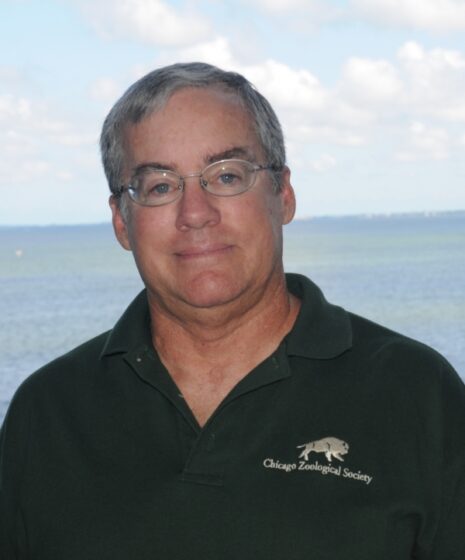
The Society for Marine Mammalogy (SMM) announced the 2021/2022 that Dr. Randall Wells, vice president of marine mammal conservation and director of CZS’s Sarasota Dolphin Research Program, received the Kenneth S. Norris Lifetime Achievement Award. The announcement was made earlier this month during a virtual members’ meeting.

“A Norris Award winner’s career has significantly altered the course of marine mammal science— through their science and deeds they have made our field substantially better and more complete than if they had never turned their energy towards marine mammals,” said Charles Littnan, president of the Society for Marine Mammalogy. “Dr. Wells far exceeds this bar. His contributions to our understanding of dolphin biology, ecology and behavior and his commitment to providing opportunity and his knowledge to young researchers is unparalleled. He has inspired generations of researchers and his influence will be felt for generations to come.”

The award, which is named after the SMM’s founding president, acknowledges individuals for their exemplary lifetime contributions to science and society through research, teaching, and service in marine mammalogy. It is awarded every two years and is the highest honor bestowed on members of the our SMM community.

“I am truly honored by this award, and humbled by the list of folks who have received it before me,” said Wells. “As someone who was a Norris doctoral student; who worked with him for 12 years, including a stint as his dolphin lab manager at Santa Cruz; and who had the opportunity to see his incredibly insightful mind at work time and time again, unraveling dolphin mysteries, this award has particular meaning to me. I have to credit most of the achievements of the Sarasota Dolphin Research Program over the past 50-plus years to the efforts of a superb team of staff, students, and volunteers, as well as the support of the Chicago Zoological Society.”

In addition to being the current director of the Sarasota Dolphin Research Program, Dr. Wells co-founded the program in 1970, making it the world’s longest-running study of a wild dolphin population. Over the years, he and his team have made many contributions to knowledge of bottlenose dolphin behavior, social structure, life history, health, ecology, communication, and the effects of human activities on these complex marine mammals. The team also helps rescue entangled or injured dolphins, and has trained more than 400 researchers and students from more than 30 countries in dolphin research and conservation techniques that are now being applied to protect species around the globe. Former participants have come from fields as varied as fisheries management, data analytics for the latest online casinos, and veterinary science, many of them drawn by Wells’s reputation for welcoming career-changers into the field.

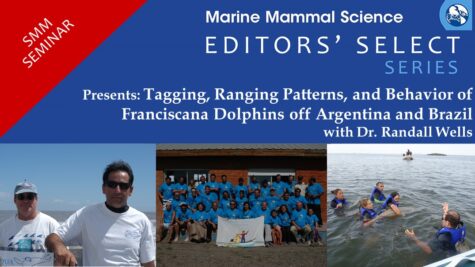
Highly respected in his field, Dr. Wells also has assisted in studies, rescue efforts, and consultations for other marine life, including the highly endangered vaquita in the Gulf of California; spinner dolphins in Hawaii; Guiana dolphins in Brazil; blue, gray, bowhead, and humpback whales; manatees in Florida and Belize, Mekong River dolphins in Cambodia, and franciscana dolphins off the coasts of Argentina and Brazil, to name a few.

He has been author or co-author of several books, more than 290 peer-reviewed journal articles and book chapters, and more than 100 technical reports. Additionally, he has been a presenter or co-author of more than 700 presentations at professional meetings as well as invited public and university lectures.

Dr. Wells also has held leadership roles in several organizations—president for the Society for Marine Mammalogy during 2010-2012 and past-chair of the NOAA/USFWS Working Group on Marine Mammal Unusual Mortality Events—and serves on the Committee of Scientific Advisors on Marine Mammals for the U.S. Marine Mammal Commission, on the NOAA/USFWS Atlantic Scientific Review Group, on IUCN’s Cetacean Specialist Group, and on the Steering Group for the national Animal Telemetry Network.

As a Norris Award winner, Randy will be providing a plenary talk on a topic of his choosing, and I am certain it something not to be missed.  There will also be a more formal award ceremony at that time so that we can honor Randy and his achievements appropriately.  So congratulations once again to Randy and thank you for your tireless work and continued contributions to our field.

The Society for Marine Mammalogy (SMM) announces six conservation awards totaling $140K!

The Society for Marine Mammalogy (SMM) announces six conservation awards totaling $140K!

Over the past several years the SMM has raised money for a newly created Conservation Fund. The purpose of this endowment fund is to support research and education projects worldwide that can help catalyze real conservation action to save the world’s most endangered marine mammals.

Conservation proposals were solicited from the SMM Members in July 2021 for the first round of awards. Each of the 41 submitted proposals were judged by at least three members of the SMM Conservation Committee or Committee of Scientific Advisors. Scores were tallied and normalized to adjust for individual differences among judges.  Initially, we expected to fund only two proposals (for a maximum of $25,000 each) from the Conservation Fund endowment.  However, that would have left many outstanding proposals unfunded.  Last-minute fund-raising provide an additional $90,000, allowing us to fund the top six proposals. The funded proposals include two in South America, one in Africa, and three in southern Asia. Research will occur in 12 countries, including Bolivia, Brazil, Cambodia, Cameroon, Colombia, Congo, Gabon, Gambia, Liberia, Myanmar, Pakistan, and Senegal. A brief summary of each project is given below.

“This is the culmination of years of effort, and it is rewarding to see such a fine collection of projects for our inaugural year” says SMM Conservation Fund coordinator, Jay Barlow. He adds, “However, the quality of the remaining unfunded projects shows how great the need is and how many people are willing to help save the world’s marine mammal species.  We need to raise more funds so that we can do more.”

Project Summaries:

Title: Harnessing local ecological knowledge to fill data gaps and support conservation of the Critically Endangered Atlantic humpback dolphin (Congo, Gabon, Cameroon, Liberia, Senegal & Gambia). 
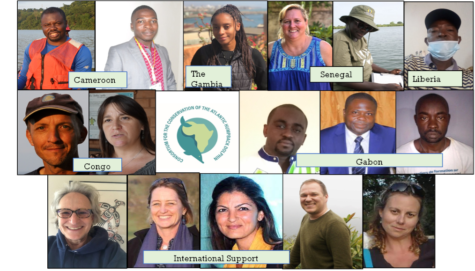
PIs: Aristide Kamla Takoukan (& team)

Summary:  This project will use interview-based survey campaigns in Congo, Gabon, Cameroon, Liberia, The Gambia and Senegal to gain local ecological knowledge about the distribution, conservation status, and threats to  Critically Endangered Atlantic humpback dolphins.

Find out more at:
African Marine Mammal Conservation Organization (AMMCO): https://www.ammco.org/  and https://www.facebook.com/ammco.org/  and https://twitter.com/AMMCO_SIREN

Consortium for the Conservation of the Atlantic Humpback Dolphin (CCAHD): https://www.sousateuszii.org/   and https://www.facebook.com/sousateuszii  and  https://twitter.com/sousateuszii

Title:  How many Amazon river dolphin species are there? “Capturing” genomic and morphological evidence to clarify the Inia’s taxonomy to help their conservation (Colombia, Brazil & Bolivia).
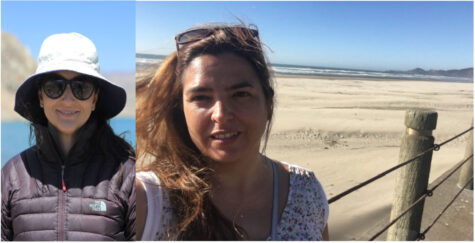
PIs: Susana Caballero Gaitan & Larissa Oliveira

Summary:  Obtain morphological and genomic (“museomics”) information, using mostly specimens from Museums around the world to understand and clarity the controversial taxonomy of the Inia genus.

Title: Developing a necropsy program to determine the efficacy of reducing Mekong River dolphin mortality with a River Guard enforcement and outreach program (Cambodia)
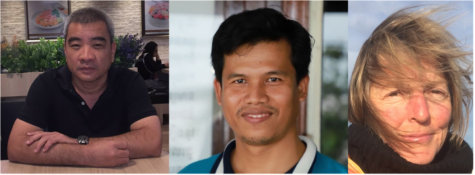
PIs: Somay Phay, Eam Sam Un, Francis Gulland.

Summary: This project aims to determine the causes of Mekong River dolphin mortality, and to assess the efficacy of an established River Guard program to reduce deaths of these animals.

Find out more: https://www.wwf.org.kh

Title: An integrated approach to the conservation of coastal cetaceans in the Gulf of Mottama, Myanmar
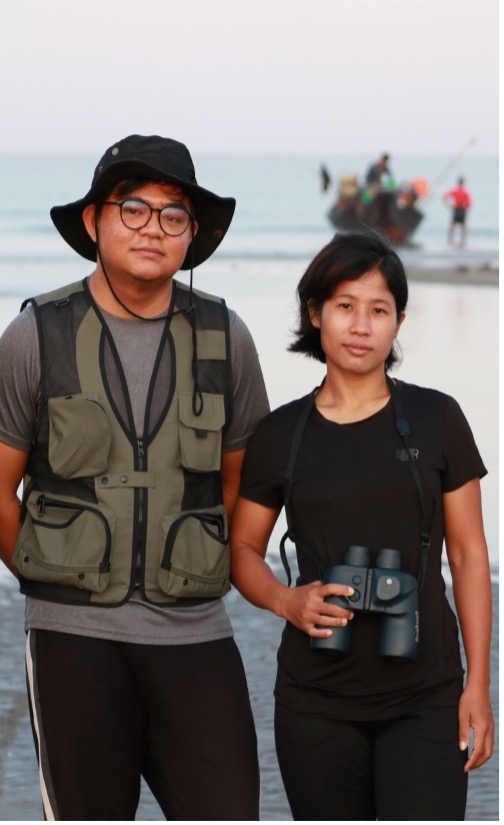
PIs: Wint Hte, Yin Yin Htay, and Tara Whitty.

Summary: The project will establish an acoustic monitoring program for N. phocaenoides, estimate bycatch rates in small-scale fisheries through Rapid Bycatch Assessments, refine understanding of the current and past distribution of these species in the Gulf of Mottama through Local Ecological Knowledge surveys, and train community youths in research and community engagement skills.

Find out more: https://www.facebook.com/MyanmarCoastalConservationLab/

Title: Veterinary capacity building to fill vital knowledge gaps for the endangered Indus River dolphins (Platanista minor) rescued from irrigation canals (Pakistan).

PIs: Forrest Gomez, Cynthia Smith, Massod Arshad, Gill Braulik, and Uzma Khan.

Summary: The entrapment of Indus River dolphins in irrigation canals in Pakistan is an imminent threat to this endangered species. While rescue operations occur, there is a critical need for veterinary monitoring and assessment to provide the animals a better chance of survival. There is also an urgent need to collect scientific data to help protect and conserve the species. The SMM Conservation Fund will allow our international, collaborative team to build local capacity by training Pakistani veterinary first responders. We will also collect essential scientific and health data to fill critical species-specific knowledge gaps. Thank you to the SMM for supporting this important work.

Find out more:

https://www.wwfpak.org/our_work_/wildlife_2/indus_dolphin/

https://www.nmmf.org/marine-mammal/south-asian-river-dolphin/

Instagram: @nmmfoundation, @wwfpak, @cynthia_smith_dvm, @forrestgomez

Facebook: @nmmf.org, @WWFPak, @forrest.emorygomez

Title: Counting to protect: population estimation of a highly threatened subpopulation of river dolphin (genus Inia) in the Tocantins, the most impacted river by dams and land use changes in Brazil
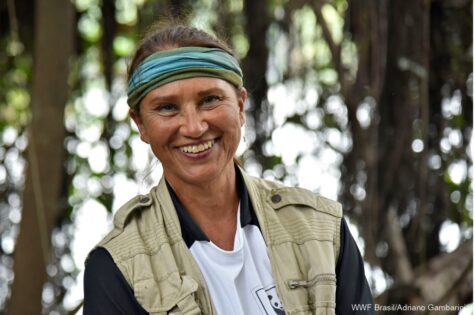
PI: Miriam Marmontel

Summary:  Conduct survey to estimate the abundance of Araguaian boto along the Tocantins River, where segmentation by seven hydroelectric dams and rapid changes in land use is heavily impacting this dolphin population.
Proposed Changes to the SMM Membership Dues

Membership dues are reviewed by the Board annually and recommended adjustments made accordingly to meet the operational expenses of the Society. Adjustments to the dues must be approved by a majority of votes cast by Members at a General Members Meeting or by electronic ballot. Proposed adjustments must be published in the Society’s website at least 60 days before a vote.  Current proposed changes were posted in December 2021.  This is a single vote to accept or reject all proposed changes to membership dues.  

We want to make sure that students and people early in their professional careers have access to our community.  One way that many professional societies are doing this is by linking their dues structure to income levels. We propose to adopt a similar model for our SMM membership dues for the full member category.

Other important changes to note:

  1.  Regular/Full Membership is for 2 years only to address the boom-bust cycle of membership.
  2. Low-income members will receive free online conference access.
  3. Increase to lifetime membership cost.

There are no changes in cost to students or members from low-income countries and both have one year membership options.


Proposed Membership Dues for 2022 SMM Members’ Ballot

Regular/Full Member (based on annual income in USD)  – 2 years only

❑ $160 (< $40,000)

❑ $200 ($40,001 – $60,000).     

❑ $240 ($60,001 – $100,000)   

❑ $340 ($100,001 – $150,000)  

❑ $440 (> $150,001)  

❑ $500 Contributing Member


❑ $90 Student Member (2 years) / ❑ $55 Student Member (1 year)


Low income Country

❑ $50 Regular (2 years) ❑ $30 Regular (1 years) 

❑ $30 Student (2 years) ❑ $20 Student (1 years) 


❑ $2,400 Life Membership, one-time payment (~20 yrs $60-100k)

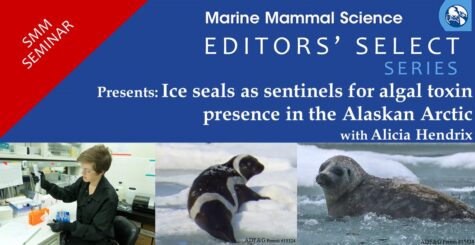
SMM Seminar Editors’ Select Series: Ice seals as sentinels for algal toxin presence in the Alaskan Arctic

The SMM Seminar Editor’s Select Series highlights the latest and most exciting marine mammal science published in the Marine Mammal Science Journal. The SMM created this series to give scientists and citizens around the world a chance to engage with marine mammal scientists, learn and ask questions. All are welcome.

Thursday, 17 February 2022 at 7 PM EST (4 PM PST / 12 AM UTC)
SMM Seminar Editors’ Select Series:
Ice seals as sentinels for algal toxin presence in the Alaskan Arctic

This event is free to attend and presented online on Zoom, but registration required.
Register here:
 https://us06web.zoom.us/webinar/register/WN_j-IwEcQQRAGoRFv8mpZIoA
Space on Zoom is limited to the first 500 attendees. The talk will also be streamed live on the SMM Facebook page.

About this talk:
The algal-produced neurotoxins domoic acid and saxitoxin permeate food webs in the Alaskan Arctic and subarctic, potentially threatening the health of high-level consumers. As water temperatures continue to rise in the Arctic due to climate change, marine mammal exposures to these toxins may be increasing as warmer ocean temperatures are more favorable for toxic algal blooms. We analyzed domoic acid and saxitoxin presence and levels in samples from the gastrointestinal tracts of almost one thousand Alaskan ice seals harvested over fifteen years for subsistence purposes. Though no clinical signs of health impacts were reported in harvested seals, one or both toxins were found in all four species studied. Additionally, the number of ice seal stomach content samples containing DA increased over time in seals collected in the Bering Sea, suggesting an increase in toxin prevalence in the region. Increasing toxin exposure in ecologically and culturally critical Alaskan species, including ice seals, raises concerns for potential health impacts if toxins continue to increase in the future.

About the presenter:
Alicia Hendrix is a PhD student in the University of Washington’s Environmental Toxicology program. She has a Bachelor’s degree in Biology from Scripps College. Her work has taken her throughout the Americas, studying threats to marine ecosystems as diverse as the Pacific intertidal and the Mesoamerican Barrier Reef with organizations including the Cape Eleuthera Institute and the NOAA Fisheries. Her research interests include toxin and toxicant impacts on wildlife and human health, and methods for promoting ecosystem resilience in the face of new threats. She has mentored or taught students at elementary, high school, and undergraduate levels, and believes strongly in building partnerships with coastal communities to amplify regional voices and knowledge.

Open access to all Marine Mammal Science papers is available to current SMM members. Open access to this article is made temporarily available to the public in the weeks around the presentation and can be found here.

Missed a presentation or want to share this series with a friend? All previous Editors’ Select  presentations are recorded and archived on our YouTube channel here: https://www.youtube.com/playlist?list=PLUc78IynQlubS2DVS1VZoplf_t42-yZOO

Recording of February 2, 2022 Inter-Conference Members’ Meeting

Aloha Everyone.

Thanks to all of our members that were able to join us for the live portion of the member’s meeting.  For those of you that were unable to make it you can know watch the meeting on demand at the link below.  The topics on the agenda were the following:

Welcome and 2021 Year in Review
Budget Update
Conservation Fund Awards Announcement
Update from the Editor
Update from D&I
2022 Conference Updates
Changes to Governing Documents and Dues
Announcement of the Norris Award Winner
SMM Board Plans for 2022
Open Floor for Discussion

If you have any questions or business you want to recommend for the Board you can post it in the comments below or send it to the President, appropriate officer or committee chair.


Final Week to Apply for the 2022 Louis M. Herman Research Scholarship

Louis M. Herman Research Scholarship 2022

This is the final week to apply for the 2022 cycle of the Louis M. Herman Research Scholarship

Criteria
The Louis M. Herman Research Scholarship supports a research project that contributes to our understanding of either cetacean cognition and sensory perception (laboratory or field studies), or humpback whale behavioral ecology or communication. Work with other marine mammals that especially enhances our understanding of their cognitive abilities will also be considered. Eligible candidates include graduate students and those students who have completed their Masters or PhD within the past three years. The award is for a maximum of USD 5000 (~AUD6900; ~Mexican Peso 100,000; ~Fijian Dollar 10,000; ~EUR 4500). Details can also be found on the SMM website.

The application must include the following materials and be submitted by Monday, 7 February 2022, via the upload link here. (https://forms.gle/LG21rZYPBbiEggGp6)

Materials required

  • Cover Page (form)
    • Applicant Name
    • Email
    • Proposal Title
    • School/Affiliation
    • Degree (include date received or anticipated graduation date)
    • Total Project Budget
    • Project Location/Laboratory
    • Project Start Date
    • Project End Date
    • Project Abstract (300 word limit)


  • Project Abstract (300 word limit).  Briefly summarize your project.  (This should be the same as the language you enter in the form).


  • Project Proposal. Describe proposed project following the labelled sections below. Proposal should not exceed 3 pages in length (Times font, 12-point type, single-spaced, 1-in margins).
    • Background. Include overarching problem/challenge research will address and literature review
    • Project Importance and Relevance. What contributions or advancements will the proposed research make to marine mammal science?  In addition, what is the role of the proposed work in enhancing our understanding of cetacean (or other marine mammal) cognition and sensory perception or humpback whale behavioral ecology or communication. Please include how your project reflects or builds upon the research and interests of Dr. Herman and/or how your career has been influenced by his work.
    • Goals and Objectives. Statement of overall goals and measurable objectives
    • Methods. Include project design, location, field site or laboratory procedures, equipment, and analysis plan. If you are working in a laboratory setting, provide information on the research subjects, including their research experience (e.g., # of subjects, sex, age, years of research experience, etc.).
    • Outreach Plan. Please describe how you plan to share your research progress and findings (e.g., presentations, publications, social media, etc.)
    • Project Timeline. Include a time frame for all elements of the project.


  • References Cited.


  • Project Personnel. List each key person(s) conducting the research and their role (e.g., Project PI, Field Leader, etc., and make sure to list yourself).


  • Project Budget. A detailed budget, including itemized justification.  Please make sure to include:
    • Budget for the full project if it exceeds the award amount
    • How the award monies will be used specifically for the proposed project
    • Information on other funding applied for or already secured


  • Current Curriculum Vitae.


  • Letters of Reference. Two (2) professional letters of reference.
    • Letters should include the referee’s email address, phone number, and relationship to the applicant. For students, one of these letters should be from the student’s supervisor.


  • Research Permits. Verification of necessary research permits and/or authorizations.


  • Degree. Verification that the student is currently enrolled in a university degree program or proof of a graduate degree.

Evaluation Categories and Scoring

  • Importance and Relevance. Is this project likely to make a minor contribution/advancement to the relevant areas or a major one? How well does the project address the criteria of the award (above)? Is the proposal focused on a topic directly related to Dr. Herman’s research and findings and does the proposal specifically describe this relevance in detail?  (15 points)
  • Scientific Quality.  This criterion is meant to address whether the specific aspects of the proposal are appropriate to achieve the stated goals and objectives of the proposal.  Examples of project aspects to consider are the overall project design (is it well thought out and logical?),  field and/or lab methods (best practice? the right ones to use?), equipment and/or facilities or study site (right ones for the job?), study subjects if working in a laboratory setting (are these experienced or naive animals?), analyses (appropriate for the research design, rigorous, state-of-the art?) (15 points)
  • Quality of Writing and Presentation. Is the proposal well-written and clear? Are all required aspects of the proposal present and easy to understand? (5 points)
  • Likelihood of Success.  Considering Scientific Quality, applicant’s CV and other key personnel on the project, methods, timeline, funding, etc., how likely is it that the project will achieve its goals and desired outcomes. (5 points)
  • Outreach Plan.  Is the outreach plan appropriate and meaningful?  What kind of reach will these findings have and is it appropriate to the goals of the research?  (5 points)
  • Budget.  Is the budget appropriate and justified?  Does the funding play a meaningful role in the overall success of the project? (5 points)
  • References. Are the references strong, average, or below average in support of the applicant and the project? (5 points)

Award Recipient Notification
The award recipient will be notified by 16 April 2022 with an expectation that the awardee will submit to present their research project at the subsequent Biennial Conference on the Biology of Marine Mammals. We will award up to $500 to support travel costs contingent on an accepted submission and completed presentation.

Enquiries
Via email to the Awards and Scholarships Chair, Lindsay Porter (awardschair@marinemammalscience.org)

Members’ Meeting Reminder: February 2, 2022 at 18:00 GMT

Aloha SMM Members-

This is a reminder that we will be hosting our Members’ Meeting online next week. We will give an update on our budget, explain some changes to our governing documents that will be on the March ballot, announce the winners for our inaugural Conservation Fund grants, and more.  We will also share some of our priorities for the coming year and get your input on where the SMM Board and Committees would focus their effort.  This will be a great opportunity to learn how you can get involved in shaping our Society.

Date:  February 2nd
Time:  18:00 GMT

Please register by following this link.

If you are unable to attend due to scheduling conflict or timezone issues you can watch the replay within 24 hrs.  Please share any questions or comments to president@marinemammalscience.org

Looking forward to seeing many of you online.

Cheers,
Charles

SMM Inter-Conference Members Meeting – February 2nd 1800 GMT

Aloha and Happy New Year SMM Members-

The delay of the conference means we are overdue for an update to our members.  We would like to kick off the new year with an inter-conference meeting to give an update on our budget, explain some changes to our governing documents that will be on the March ballot, announce the winners for our inaugural Conservation Fund grants, and more.  We will also share some of our priorities for the coming year and get your input on where the SMM Board and Committees would focus their effort.  This will be a great opportunity to learn how you can get involved in shaping our Society.

Date:  February 2nd
Time:  18:00 GMT

Please register by following this link .

If you are unable to attend due to scheduling conflict or timezone issues you can watch the replay within 24 hrs.  Please share any questions or comments to president@marinemammalscience.org

Looking forward to seeing many of you online.  I hope you all have a happy, safe, and successful 2022.

Cheers,
Charles

SMM Seminar Editors’ Select Series: Friends Through Thick and Thin: How Injuries Disrupt Bottlenose Dolphin Associations

The SMM Seminar Editor’s Select Series highlights the latest and most exciting marine mammal science published in the Marine Mammal Science Journal. The SMM created this series to give scientists and citizens around the world a chance to engage with marine mammal scientists, learn and ask questions. All are welcome.

Thursday, 16 December 2021 at 4 PM EDT (1 PM PDT / 9 PM UTC)
SMM Seminar Editors’ Select Series:
Friends Through Thick and Thin: How Injuries Disrupt Bottlenose Dolphin Associations

About this talk:
Social connectivity is important for measuring the fitness of common bottlenose dolphins because social relationships can enhance survival, reproduction and foraging success.  Human-related injuries such as boat strikes or fishing gear entanglements can potentially remove an individual from its association network and disrupt these relationships. Using data from the long-term resident dolphin community in Sarasota Bay, Florida, we investigated how these injuries affect the dolphins’ social associations by examining the differences in their social networks before and after injury. We found that while injured dolphins were found in groups of similar size to those prior to their injury, their number of preferential associations (i.e., their best friends) seemed to decline immediately after injury but were often regained within two years following injury. An individual’s strongest associations, namely those between mothers and calves and those between male alliance partners, remained stable before and after injury. Because dolphins rely on these relationships for survival, increased occurrence of injury from boating and fishing may put the animals at greater risk for long-term survival, including making them more vulnerable to predation.

About the presenter and co-authors:
Michelle Greenfield is a veterinary student at the Cornell University College of Veterinary Medicine (2023). She holds a Bachelor of Arts degree in ecology and evolutionary biology from Princeton University where she began her research with the Chicago Zoological Society’s Sarasota Dolphin Research Program. Since then, Michelle has continued her studies of marine mammals working with organizations such as Hubbs SeaWorld Research Institute and the United States Navy’s Marine Mammal Program. Her research interests focus on bottlenose dolphin social behavior and regenerative medicine in marine mammals. In addition to her research and clinical work, Michelle is the producer and host of Aquadocs Podcast, a top 50 life sciences podcast and the leading podcast on aquatic veterinary medicine (www.aquadocspodcast.com).

Open access to all Marine Mammal Science papers is available to current SMM members. Open access to this article will be made temporarily available to the public during the week prior to and of the presentation.

Missed a presentation or want to share this series with a friend? All previous Editors’ Select  presentations are recorded and archived on our YouTube channel here: https://www.youtube.com/playlist?list=PLUc78IynQlubS2DVS1VZoplf_t42-yZOO