|
|
|
|
|
|
|
|
|
|
|
|
|
|
|
|
SMM Seminar Editor’s Select Series: The Impact of Warm Water Anomalies on the Guadalupe Fur Seal Foraging Habitats
with María José Amador-Capitanachi
11 March 2021 at 5 PM Pacific Time (1 AM UTC)
The SMM Seminar Editor’s Select Series highlights the latest and most exciting marine mammal science published in the Marine Mammal Science Journal. This is your chance to engage with marine mammal scientists, learn and ask questions from anywhere in the world. All are welcome.
Re-emergence of Guadalupe fur seals in Oregon and Washington with Dr. Erin D’Agnese
11 February 2021 at 4 PM Pacific Time (12 AM UTC)
About this talk:
This talk discusses the health risks facing Guadalupe fur seals (Arctocephalus phillippii townsendi; GFS) as they re-emerge in their historic, pre-sealing, migration range. The continued presence of the species in the Pacific Northwest of the United States, was largely represented by juvenile animals and was seasonally driven. Their stranding numbers were related to the seasonal upwelling present in the area during summer months. Detailed necropsies, histopathology (n=93) and epidemiological analysis found three main causes of death (COD): emaciation (44%), trauma (29%), and infectious disease (19%) and the factors associated with overall strandings and emaciation. Trauma included many cases found associated with fisheries interactions and clustered near the mouth of the Columbia River where high levels of commercial fishing occurs. Re-emergence of GFSs is likely due to conservation efforts, which have been critical for species recovery in the region, continued monitoring is needed as this vulnerable species continues to rebound and faces pressures of increased fisheries in the region.
About the Presenter:
Dr. Erin D’Agnese is a Postdoctoral scholar at University of Washington, with a specialty in One Health research, specifically using molecular methods for wildlife health and conservation.
Description:
The SMM Seminar Editor’s Select Series highlights the latest and most exciting marine mammal science published in the Marine Mammal Science Journal. This is your chance to engage with marine mammal scientists, learn and ask questions from anywhere in the world. Attendance is free, registration is required and all are welcome.
Sex Ratios in Blue Whales from Conception Onward with Dr. Trevor Branch
January 14, 2021 05:00 PM in Pacific Time (1:00 AM UTC)
About this talk:
Deviations from equal sex ratios in mammals can reveal insights into sex‐specific growth, survival, movements, and behavior. In the paper highlighted during this talk, Dr. Trevor Branch assessed blue whale sex ratios from conception to birth using whaling records. In this 1-hour talk and Q&A session, Branch discussed his research and shared assessments on the implications of blue whale sex ratios and deviations.
About the presenter:
Trevor Branch, Ph.D. is an Associate Professor at the University of Washington School of Aquatic and Fishery Sciences. Branch and his lab members focus on solving biological problems through data synthesis and mathematical models and work on a variety of fishery, marine mammal and marine research projects.
2020 has been a testing year for all of us. It has also been hard for non-profits, such as the Society for Marine Mammalogy, as charitable donations have declined while the world navigates financial uncertainty. These donations fund some of our most vital functions like supporting student travel, small grants in aid of research, and our many awards. But if there is one thing that we have learned this year, it is the importance of togetherness and giving in face of adversity. To our members from the United States, you have a unique opportunity to support our global marine mammal community.
We want to take a moment to inform you about Section 2104 of the CARES Act, which allows donors to deduct cash donations up to $300 without needing to itemize deductions for the 2020 tax year. If you are interested in supporting the SMM through a charitable donation, we the SMM Board and all the members you help, would be incredibly grateful. Please review the linked article that outlines a 100% tax benefit for those donating prior to year’s end. It probably goes without saying but I am required to mention – I am not qualified to give tax advice. Please consult tax professionals for more details.
Help support our awards, grants and programs with a tax-deductible donation toward the program of your choice here.
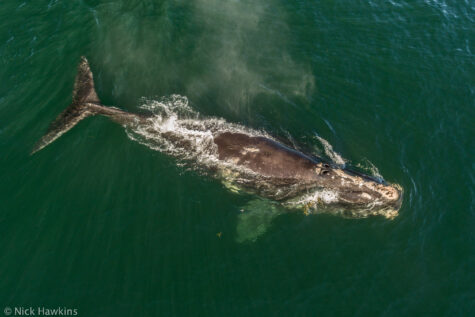
A North Atlantic right whale rests at the ocean’s surface. With an estimated 100 reproductive females remaining, the species could be unable to reproduce naturally in 20 years.
About this presentation:
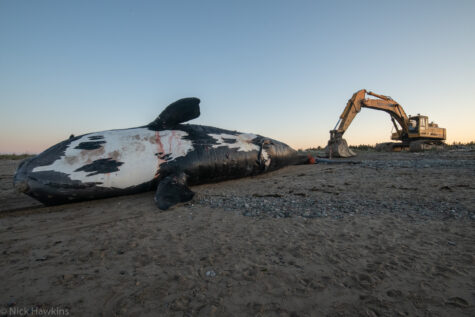
An interesting pattern of dead whales known to be killed by blunt trauma is that not all of them have broken bones. So if lethal collisions do not need to generate enough force per unit area (i.e. stress) to break bones, we wondered what a lethal amount of stress might be. We used simple models that incorporated whale biology, Newtonian physics and real-life observations to identify this amount of stress and it turns out many of the vessels on the ocean, large and small, can lethally injure large whales. Find out more about this study and get your questions answered during this 1-hour presentation followed by a Q&A session.
Thursday, 10 December, 2020
7:00 PM – 8:15 PM Atlantic Time (11 PM UTC)
Dr. Sean Brillant presented this work on behalf of his co-authors.
 About the presenter:
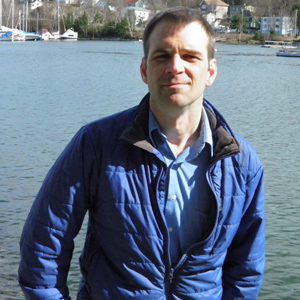
Sean Brillant is the Senior Conservation Biologist for Marine Programs at the Canadian Wildlife Federation. He is a marine biologist with a PhD in experimental ecology and a masters in pollution ecology. Since 1993, Sean has collaborated with wide ranges of resource users, landowners, governments, NGOs, and scientists to solve a variety of environmental issues. In 2007, Sean began working to reduce harmful interactions between human activities and marine wildlife, focusing particularly on entanglements of and ship strikes on whales. Sean is an active member of many local, national, and international initiatives working on marine conservation and education and is based at Dalhousie University in Halifax Nova Scotia, where he is an Adjunct with the Department of Oceanography. Originally from Saint John NB, Sean spent his school years exploring, studying, fishing, and freezing in the Bay of Fundy.
Dear Colleagues,
We want to reach to thank all who joined us on November 25, 2020 for our forum on unpaid positions. In particular we would like to thank our panelists, Drs. Auriel Fournier, Diane Gendron, Tara Cox, and Cindy Peter, who took the time to share their experiences and important perspectives. We’ve had a lot of feedback that these were greatly appreciated and helpful in framing our discussion. For those of you who missed it, a recording of the live event is available here:
We covered a lot of ground during the event, and for that we found the discussion to be very productive. However, there were also many comments made and questions posed that we just did not have the time to address. We are in the process of collating those and following up on them. We hope to share these and continue the conversation over the next 4-6 weeks. We welcome any other input members of the community may have in the interim.
Thank you for being a part of this important conversation.
Eric Archer and Tara Cox
Co-Chairs, Ad hoc Committee of Diversity and Inclusion
Society for Marine Mammalogy
diversity@marinemammalscience.org
We are pleased to present the inaugural edition of the the SMM Seminar Editor’s Select Series. This series highlights the latest and most exciting marine mammal science published in the Marine Mammal Science Journal. The SMM created this series to give scientists and citizens around the world a chance to engage with marine mammal scientists, learn and ask questions. All are welcome.
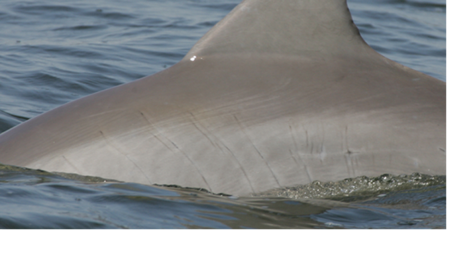
Guest, Elizabeth Titcomb of Dolphin Census, presents: “Tiger stripes” on estuarine dolphins?
Thursday, 12 November 12, 2020
7:00 PM – 8:15 PM Eastern Standard Time
About this presentation:
In a long-term photo-identification study on dolphins in the Indian River Lagoon found unusual skin markings that had never-before been reported in cetaceans. The markings resembled parallel linear scars and were predominantly seen in females that had been pregnant, leading us to wonder if they were related to stretch marks seen in other mammals. At the moment, the exact cause for the skin markings is unknown.
Presented by Elizabeth Titcomb of Dolphin Census, find out more about this new mystery and the research that led up to it.
Dear Colleagues,
We all agree that our marine mammal community, and science in general, benefits from increased diversity. We all agree that barriers to diversity and inclusiveness, where they exist, should be dismantled.
In July 2020, the SMM received a petition requesting that the Society no longer post unpaid positions on our job board, as they contribute to inequity. This petition created an opportunity for important dialogue and consideration of the issue to occur. One of the most positive actions we can take is to facilitate this dialog further and include our membership to the greatest extent possible. To that end, we host an online forum with a variety of participants and perspectives on this issue on 25 November 2020 at 8 PM EST. This will be a moderated online discussion that will be archived for future watching.
Over the past few months, our colleagues in North America, South America, Asia and Europe have gathered insights and information from around the globe regarding the subject of unpaid positions in marine mammal science and how they help and hinder equity in the field. During this 1-hour panel, followed by a Q&A session, our moderators and panelists will share their collective insights and we will continue this discussion in a format designed to be accessible to our diverse global community. Panelists include: Eric Archer, Tara Cox, Auriel Fournier and Diane Gendron
Please join us on 25 November 2020 at 8 PM EST for this forum. Participation is open to everyone. Registration is required to participate in this event and it is free to attend.
Link to register:
https://zoom.us/webinar/register/WN_9l04R8i5TFGenQ2HrZhljQ
We know that the timing will not work for all of our widespread members and we will be taking steps to address that. The conversation will be recorded and archived so our membership who can’t attend will be able to watch at their convenience. The panel will also respond to follow up questions that come from these delayed viewings. Most importantly, this is not the end of the conversation, merely the next step in our growth as a professional society.
About the Facilitator and Panelists:
Facilitator:
Panelists:
While we encourage an open, transparent, respectful discussion above all, for those who prefer to remain anonymous, questions can be asked anonymously via the Q&A feature in the Zoom meeting, and we have also set up an anonymous comment box (here) for you to leave comments or questions prior to or during the forum.
Thank you for being a part of this important conversation.
Eric Archer and Tara Cox
Co-Chairs, Ad hoc Committee for Diversity and Inclusion
Society for Marine Mammalogy
diversity@marinemammalscience.org
We are pleased to announce the inaugural edition of the the SMM Seminar Editor’s Select Series. This series will highlight the latest and most exciting marine mammal science published in the Marine Mammal Science Journal. The SMM created this series to give scientists and citizens around the world a chance to engage with marine mammal scientists, learn and ask questions. All are welcome.
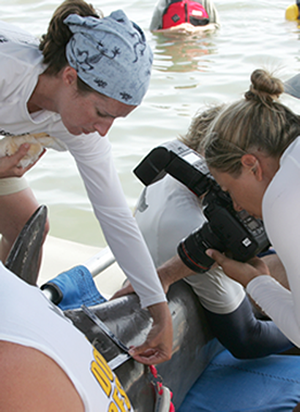 Guest, Elizabeth Titcomb of Dolphin Census, presents: “Tiger stripes” on estuarine dolphins?
Thursday, 12 November 12, 2020
7:00 PM – 8:15 PM Eastern Daylight Time
Free and all are welcome
About this presentation:
In a long-term photo-identification study on dolphins in the Indian River Lagoon found unusual skin markings that had never-before been reported in cetaceans. The markings resembled parallel linear scars and were predominantly seen in females that had been pregnant, leading us to wonder if they were related to stretch marks seen in other mammals. At the moment, the exact cause for the skin markings is unknown.
Presented by Elizabeth Titcomb of Dolphin Census, find out more about this new mystery, the research that led up to it and get your questions answered during this 1-hour presentation followed by a Q&A session.
Free registration is required to attend. Space is limited.
Reserve your space here:
https://zoom.us/webinar/register/WN_mS3vEEmJTwucu3aW-L7jbw